
Another winter is upon us, and for many Canadians, that means having to deal with condensation and frosting on windows. Besides being a nuisance, excessive condensation on windows may eventually cause damage to window frames or finishes near the window opening. What causes condensation and frosting, and what can be done to prevent it?
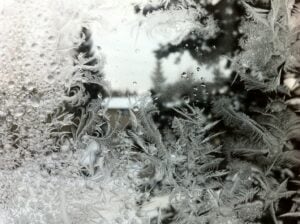
Figure 1: Though occasionally beautiful, frost on a window is often a problem (source: Lohonyai 2014).
Condensation forms on surfaces that are colder than the dew point temperature (DPT) of the air. The maximum amount of water vapour that can mix with air depends on the temperature: warmer air can hold more moisture. Air at 20 °C can have nearly 23 times more water vapour than air at -20 °C! If air cools below its DPT, water vapour will leave the air to form condensation.
In the past, houses tended to stay dry because they were drafty and moisture in the home was quickly carried outdoors. Modern homes are constructed to minimize air leakage. This saves on heating costs, but also traps more moisture inside the home. At the same time, windows are relatively poor thermal insulators. A significant proportion of heat loss through windows is actually resisted by a thin layer of air that clings to the interior side of the window, rather than by the window material. The window material is analogous to the exterior siding of a wall and the air layer is analogous to the wall’s insulation. Anything outside the insulation gets very cold during winter. When warm, moist air from inside the home reaches one of these cold windows, the air cools and vapour condenses or freezes.
Most approaches to controlling condensation are simply measures to reduce the amount of water vapour in the home, which is equivalent to reducing the DPT. Here are some tips on reducing indoor humidity:
- Turn off humidifiers.
- Use a dehumidifier.
- Use cold water for washing dishes and clothing.
- Ensure dryers are properly vented to the exterior and that dryer ducts are not leaking.
- Take quicker showers. Showering produces approximately 1 kg of vapour every 23 minutes (1 kg of vapour is equivalent to 1 L, or about 34 oz, of liquid water).
- Use exhaust fans while cooking or showering. On average, cooking a meal for four people produces about 0.2 to 0.3 kg of water vapour.
- Don’t heat water to a rolling boil if you don’t have to. For example, you can brew tea or prepare instant soup/noodles with water that’s at a few degrees below boiling.
- Store firewood in the garage or shed. Drying firewood produces around 1 to 3 kg of vapour per day per cord of firewood.
- Keeping a few house plants is okay, but don’t go overboard. A typical house plant releases about 0.05 to 0.1 kg of water per day.
- Open the windows or doors (at least once in a while) to increase ventilation. This will increase your heating bill somewhat, but it will also help remove moisture. Alternatively, consider installing a heat recovery ventilator (HRV). Direct exchange of warm indoor air with cold outdoor air results in significant heat loss. HRVs perform this air exchange while reducing that heat loss by 75 to 85%.
Guidelines developed at the University of Minnesota recommend indoor humidity below 30% to control condensation when the outdoor temperature is -12 to -18 °C. However, it should be noted that low humidity can pose comfort and even health problems for some people. Complaints of chapped lips, dry skin, and dry nasal passages become increasingly likely as the indoor humidity drops below 30%. Low humidity also causes wood to shrink, which sometimes leads to warping or checking. Most flooring manufacturers recommend keeping humidity between 35% and 55% to protect hardwood floors. Other wooden items in the home like furniture and musical instruments may also be sensitive to low humidity. So, if you can’t solve your condensation problems by reducing indoor humidity, there are still some other options that work by stopping moisture from reaching the cold surface or by ensuring the surface temperature doesn’t drop below the DPT. Here are some additional tips for controlling condensation:
- Open drapes and blinds. This encourages air circulation at the window and keeps the window surface a little bit warmer.
- Install a plastic film (window insulator kit). It is important to seal the plastic correctly so that air can’t leak around it. If the film leaks air it could actually exacerbate the condensation issues.
- Consider installing storm windows if not already present.
- Check the window seals and take corrective action as necessary. In storm window assemblies, the inner window should be as airtight as possible and the outer window should be comparatively leaky.
- Ensure window openings are properly sealed and insulated. Inadequate insulation and/or air sealing around the rough opening can result lower temperatures along the edges and corners of the window relative to a properly installed window.
- Replace problem windows with more efficient models. Choose windows with a high Condensation Resistance Factor (CRF).
- If windows are installed toward the outside face of the wall, consider reconfiguring the wall openings so you can install new windows closer to the inside face of the wall. Windows placed toward the inside face of the wall tend to stay a little warmer in winter because they receive more air circulation on the interior side.
To summarize, condensation and frost form on windows because the windows are colder than the dew point temperature of the indoor air. Reducing vapour production and removing vapour from the home are often the best ways to eliminate condensation problems. If problems persist, repair or renovation work ranging from weather-stripping windows to replacing windows with more efficient models may need to be considered.
References
ASHRAE. Handbook of Fundamentals. American Society of heating Refrigeration and Air-conditioning Engineers, Atlanta, GA, 2009.
Hutcheon, N.B. and Handegord, G.O.P. Building Science for a Cold Climate. John Wiley & Sons, New York, NY, 1983.
Lohonyai, A.J. Frost fractals on a window, Personal photograph, November 2014.
Straube, J.F. and Burnett, E.F.P. Building Science for Building Enclosures, Building Science Press, Westford, MA, 2005.
TenWolde, A. and Pilon, C.L. “The Effect of Indoor Humidity on Water Vapor Release in Homes” in Thermal Performance of the Exterior Envelopes of Buildings X, American Society of heating Refrigeration and Air-conditioning Engineers, Atlanta, GA, 2007.
Trechsel, H.R. and Bomberg, M.T. (eds.) Moisture Control in Buildings: The Key Factor in Mold Prevention, 2nd edition, American Society for Testing and Materials, West Conshohocken, PA, 2009.